
Arundhati Roy
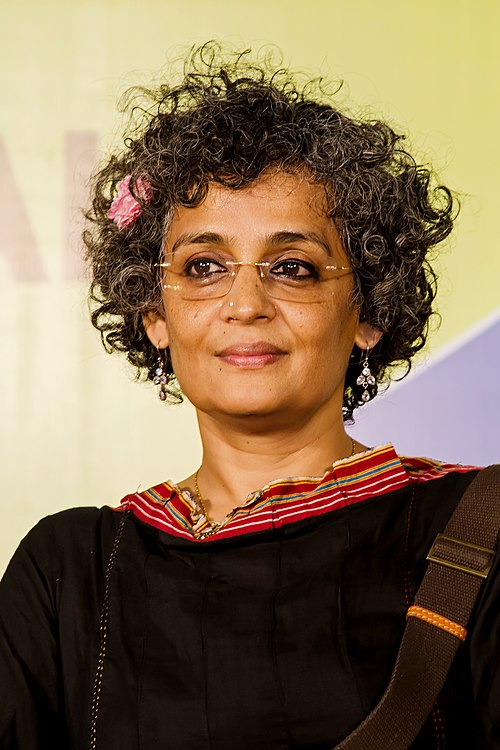
| Born | Suzanna Arundhati Roy 24 November 1961 (age 63) Shillong, Assam, India[1] (now in Meghalaya, India) |
|---|---|
| Occupation | Writer, essayist, activist |
| Education | Lawrence School |
| Alma mater | SPA Delhi |
| Period | 1997–present |
| Genre | Fiction, non-fiction |
| Notable works | The God of Small Things |
| Notable awards | National Film Award for Best Screenplay (1988)Booker Prize (1997)Sydney Peace Prize (2004)Orwell Award (2004)Norman Mailer Prize (2011)PEN Pinter Prize (2024) |
| Spouse | Gerard da Cunha(m. 1978; div. 1982)[2][3]Pradip Krishen (m. 1984)[2][3] |
Not to be confused with Anuradha Roy (novelist).
Suzanna Arundhati Roy (Bengali pronunciation: [orund oti rae]; born 24 November 1961)is an Indian author best known for her novel The God of Small Things (1997), which won the Booker Prize for Fiction in 1997 and became the biggest-selling book by a non-expatriate Indian author.[1] She is also a political activist involved in human rights and environmental causes. She was the winner of the 2024 PEN Pinter Prize, given by English PEN, and she named imprisoned British-Egyptian writer and activist Alaa Abd El-Fattah as the “Writer of Courage” with whom she chose to share the award.
Introduction
In a world where the written word often remains detached from action, Arundhati Roy stands out as someone who merges literature with activism, storytelling with courage. As a woman writer and a vocal public intellectual, she offers a powerful example of how one person can use voice, vision and moral conviction to challenge systems—not just conform to them.
Breakthrough in Literature
Roy’s debut novel The God of Small Things (1997) became an international sensation. It won the Booker Prize that year and remains one of the best‐selling books by a non‐expatriate Indian author. Encyclopedia Britannica+1
The novel is set in her native Kerala (the fictional “Ayemenem”) and weaves together themes of childhood, family, caste, love and trauma in a lyrical yet radical voice. gradesaver.com+1
Her success with fiction gave her the platform—but she channeled that platform into activism rather than simply continuing with more novels.
Activism and Public Engagement
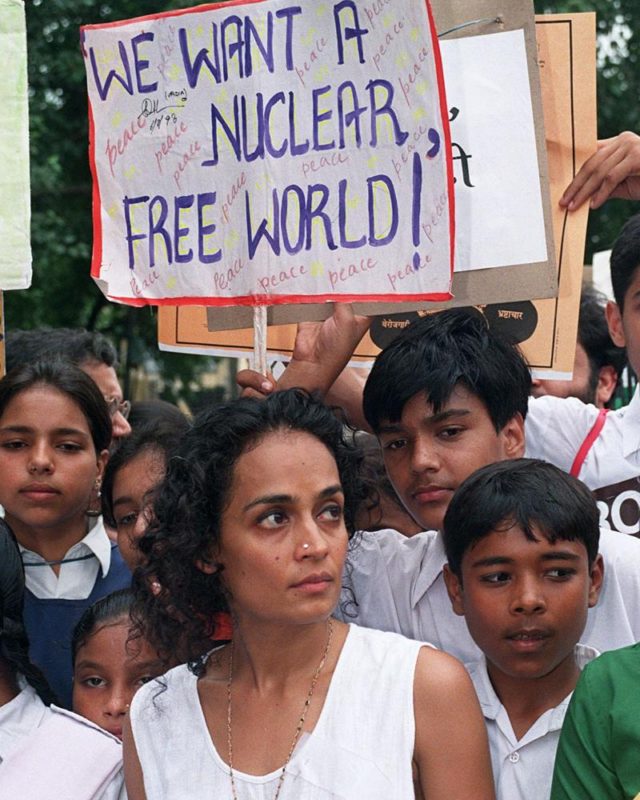
Roy has used her voice not only as a writer, but as an activist on issues of human rights, environmental justice, anti‐globalization, and social equality. Encyclopedia Britannica+1
Examples of her activism include:
- Speaking out on the Narmada Dam protests, drawing attention to the displacement of tribal people and ecological damage. Encyclopedia Britannica+1
- Publishing powerful nonfiction collections such as The Algebra of Infinite Justice (2001) and Capitalism: A Ghost Story (2014), which analyze power, inequality and capitalism. Encyclopedia Britannica+1
- Accepting legal risks: she has faced charges of contempt of court and sedition for her remarks, demonstrating that commitment to one’s convictions may come at cost. Encyclopedia Britannica
Personal and Symbolic Moments
- Her mother Mary Roy was herself a pioneer: in 1986 she successfully challenged the Travancore Christian Succession Act and won equal inheritance rights for Christian women in Kerala. That familial legacy of women’s rights‐activism is part of Roy’s story. Encyclopedia Britannica+1
- After her novel’s success, Roy channelled much of the prize money toward human rights causes—a symbolic choice reflecting her priorities.
Encouragement for Women and Its Significance
Arundhati Roy’s life offers several instructive aspects for women and those aspiring for change:
- Claim your voice: Whether through fiction or essay, Roy reminds us that women’s perspectives matter, their stories matter, and they can impact the world.
- Bridge art and action: She shows that creative work (writing) and civic work (activism) need not be separate—and that one’s success can be leveraged for wider change.
- Embrace complexity: Roy’s identity (female, Indian, Christian, activist) resists easy categorisation. She models embracing multilayered identity rather than one dimension.
- Stand by convictions: The legal and social risks she’s borne underscore that speaking truth to power can be costly—but can also be transformative.
- Support others: Her legacy as a woman writer activating change invites other women to imagine roles beyond expected norms—in literature, public discourse, environmental/rights work.


From the lush landscapes of Kerala to the global stage of literary and political debate, Arundhati Roy’s journey is more than a story of success. It’s a story of commitment: to craft, to community, to conscience. Her path encourages us—especially women—to see that writing is not just about personal glory, activism not just about protest, and identity not just about labels. It’s about using what you have—voice, skill, insight—to speak, to act, and to influence.